
Nurse Jobs in Saudi Arabia 2026: Complete Guide to Salaries, SCFHS Licensing & How to Apply
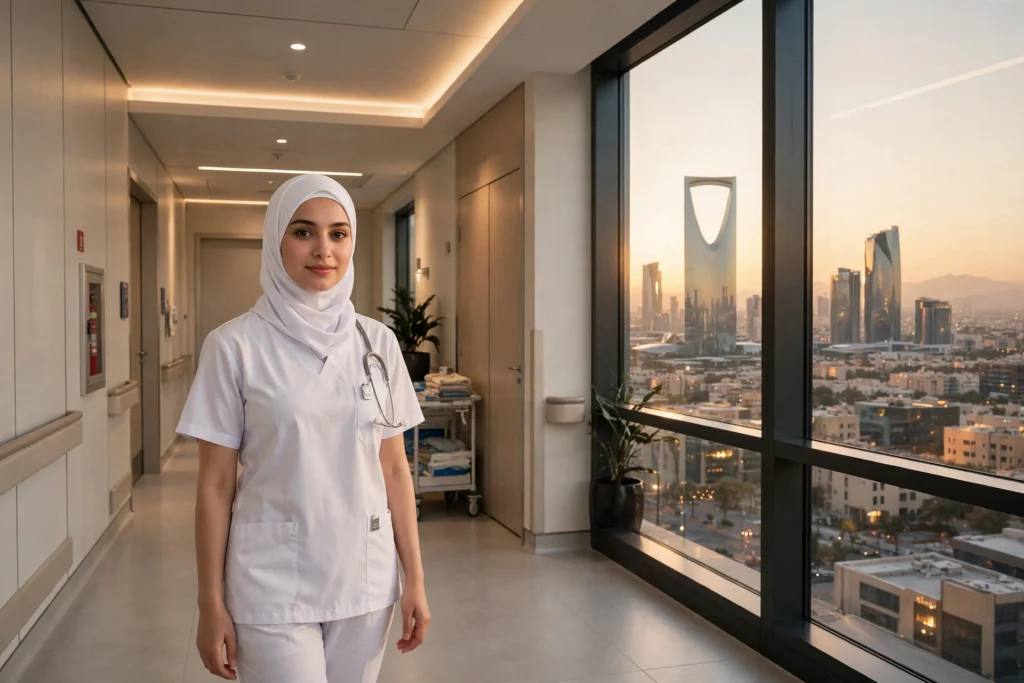
Saudi Arabia remains one of the best-paying destinations in the Middle East for nursing professionals, and nurse jobs in Saudi Arabia 2026 are in strong demand as the Kingdom expands hospitals and clinics under its Vision 2030 healthcare reforms. Whether you are a registered nurse, staff nurse, or an ICU specialist, the Kingdom offers tax-free salaries, free accommodation, and structured career growth.
This guide covers everything: the 2026 job market, in-demand roles with real salary ranges in SAR, licensing requirements (SCFHS, Mumaris Plus, DataFlow, Prometric exam), how to apply, benefits, and frequently asked questions.
Quick Answer: Nurse jobs in Saudi Arabia 2026 pay roughly SAR 4,000–12,000 per month depending on role and experience, with top sectors being ICU/critical care, emergency, and general ward nursing. Foreign nurses need SCFHS licensing via Mumaris Plus, DataFlow credential verification, and the Prometric (SNLE) exam; most employers sponsor the work visa, housing, and flights.
Nurse Jobs in Saudi Arabia 2026: Job Market Overview
Healthcare is one of the fastest-growing employment sectors in the Kingdom. Saudi Arabia is building new medical cities, expanding private hospital chains in Riyadh, Jeddah, and Dammam, and staffing giga-project facilities such as NEOM. This expansion keeps demand for foreign nursing staff consistently high.
Most nursing vacancies come from three employer types:
- Government hospitals — stable pay, strong benefits, and job security. Salaries follow structured grades.
- Private hospital groups — often pay slightly higher base salaries and may add housing allowances or performance incentives.
- Specialized clinics and medical cities — hire for niche roles (dialysis, oncology, NICU) at premium rates.
Contracts are typically two years, renewable, with 8-hour or 12-hour shifts. Many nurses arrive through hospital direct recruitment, recruitment agencies, or government-to-government programs. The employer normally sponsors your work visa, so you do not pay recruitment fees to a legitimate employer — be cautious of anyone asking for money upfront.
In-Demand Nursing Roles & Salaries in 2026
Salary ranges below are realistic market estimates for 2026, drawn from current employer postings and salary surveys. Your actual offer depends on your qualification, years of experience, specialty, and employer type. Always confirm the full package in your written contract.
- Junior Staff Nurse — SAR 4,000–5,500 per month. Entry-level roles in general wards, often with free shared accommodation.
- Registered Nurse (general ward) — SAR 4,500–7,000 per month. The most common vacancy category across hospitals.
- Experienced Staff Nurse (3–7 years) — SAR 5,500–8,000 per month. Higher pay in surgical, medical, and telemetry units.
- ICU / Critical Care Nurse — SAR 6,000–9,000+ per month. ICU skills command a premium because of the shortage of critical-care nurses.
- Emergency / ER Nurse — SAR 5,500–8,500+ per month. Triage and emergency experience is valued in busy urban hospitals.
- Specialized Nurse (dialysis, oncology, NICU) — SAR 6,000–10,000+ per month. Certifications in a specialty push offers toward the upper end.
- Head Nurse / Nurse Manager — SAR 14,000–18,000+ per month. Requires a BSN or higher plus several years of leadership experience.
- Nurse Educator / Clinical Affairs Leader — SAR 12,000–18,000 per month. Combines clinical expertise with training responsibilities.
Note that some overseas recruitment postings in 2026 advertise lower figures (around SAR 4,200–5,000 for basic staff-nurse posts), while specialized roles go well above SAR 10,000. Compare the total compensation — housing, transport, airfare, and overtime — rather than the base salary alone.
Requirements for Nurse Jobs in Saudi Arabia 2026
To land nurse jobs in Saudi Arabia 2026, you must meet both the employer’s hiring criteria and the Kingdom’s licensing rules. Here is what you need:
Education and Experience
- A Bachelor of Science in Nursing (BSN) or a recognized 3-year nursing diploma from an accredited institution.
- Minimum 2 years of post-qualification clinical experience — required by SCFHS for foreign nurses’ classification.
- A valid nursing license/registration in your home country.
- A Good Standing Certificate from your licensing authority (usually must be issued within the last 6 months).
SCFHS Licensing: Mumaris Plus, DataFlow, and the Prometric Exam
Every foreign nurse must be licensed by the Saudi Commission for Health Specialties (SCFHS) before practicing. The process runs through these steps:
- DataFlow verification (PSV) — Your degrees, licenses, and experience certificates are authenticated by DataFlow, SCFHS’s verification partner. This takes roughly 4–10 weeks, so start early.
- Mumaris Plus registration — Create your profile on SCFHS’s official licensing portal and upload all documents.
- Professional classification application — SCFHS evaluates your education and experience and assigns a category (e.g., Technician, Specialist).
- Prometric (SNLE) exam eligibility — Once approved, you schedule the Saudi Nursing Licensing Examination at a Prometric test center. The exam can be taken at Prometric centers outside Saudi Arabia, so many nurses pass before traveling.
- Professional registration and license issuance — After passing, SCFHS issues your classification certificate and license, which your employer activates on arrival.
The full licensing timeline is typically 3 to 5 months, so begin the DataFlow and Mumaris Plus steps while you are still job hunting.
Medical Fitness and Documents
Keep these ready: passport with 6+ months validity, passport photos (white background), degree and transcripts, nursing registration certificate, experience letters, updated CV, police clearance (where required), and medical fitness reports. Saudi work visas for healthcare staff also require a medical examination through the approved Wafid (GAMCA) system.
How to Apply for Nurse Jobs in Saudi Arabia 2026
- Prepare your documents — Scan everything: degree, transcripts, license, good-standing certificate, experience letters, passport, and photos.
- Start licensing early — Submit your DataFlow verification and register on Mumaris Plus. Many hospitals shortlist candidates who already have SCFHS eligibility.
- Find genuine vacancies — Check hospital career pages (major Riyadh, Jeddah, and Eastern Province hospitals), reputable international healthcare recruiters, and government recruitment bodies in your country. Avoid agents demanding advance payments.
- Tailor your CV — Highlight your specialty, years of experience, and SCFHS status. Mention ICU, ER, or specialty certifications prominently.
- Attend interviews — Most first interviews happen online. Hospitals test clinical knowledge, English communication, and scenario handling.
- Sign the contract carefully — Verify salary, housing, transport, annual airfare, medical insurance, overtime rates, and end-of-service benefits before signing.
- Complete visa processing — Your employer issues the work visa (Block Visa/Iqama route); you complete the Wafid medical and visa stamping, then travel.
Salary & Benefits for Nurse Jobs in Saudi Arabia 2026
Saudi nursing packages go well beyond the monthly salary. A typical expatriate contract includes:
- Tax-free base salary — SAR 4,000–12,000+ per month depending on role and experience.
- Free or subsidized accommodation — furnished housing or a housing allowance (often around SAR 2,000/month at senior levels).
- Transportation — employer-provided transport or an allowance (around SAR 1,500/month for senior roles).
- Annual round-trip airfare — to your home country, once a year.
- Medical insurance — full coverage for you; some employers extend it to dependents.
- Overtime and shift differentials — paid extra for night shifts, weekends, and overtime hours.
- End-of-service benefits — a gratuity paid at contract completion, calculated on your basic salary.
- Paid leave — typically 30 days of annual leave plus public holidays.
Because income is tax-free and housing is often covered, nurses commonly save a large share of their salary — one of the biggest reasons the Kingdom attracts nursing talent worldwide.
FAQs About Nurse Jobs in Saudi Arabia 2026
What is the average nurse salary in Saudi Arabia in 2026?
Most registered nurses earn between SAR 4,500 and SAR 8,000 per month, with ICU and specialized nurses reaching SAR 9,000–12,000+ and nurse managers SAR 14,000–18,000+.
Do I need SCFHS licensing to work as a nurse in Saudi Arabia?
Yes. Every foreign nurse must complete DataFlow verification, register on Mumaris Plus, pass the Prometric (SNLE) exam, and receive SCFHS classification before practicing.
Can I take the SCFHS Prometric exam from my home country?
Yes. The Prometric exam can be taken at Prometric test centers outside Saudi Arabia, so many nurses pass the exam before traveling.
How long does the SCFHS licensing process take?
Typically 3 to 5 months, including 4–10 weeks for DataFlow verification, classification, and the Prometric exam.
How much experience do I need for nurse jobs in Saudi Arabia?
SCFHS requires a minimum of 2 years of post-qualification clinical experience for foreign nurses, and most employers prefer 2+ years as well.
Do Saudi hospitals provide visa sponsorship for nurses?
Yes. Employers normally sponsor the work visa, provide or fund accommodation and transport, and cover annual airfare and medical insurance.
JobLoop brings you practical, research-based job guides for the Gulf and Europe. Salary figures are market estimates for 2026 — always verify your exact package in the written employment contract.