Jobs in Jeddah 2026: Complete Guide to Finding Work, Salaries & Visa
If you are searching for jobs in Jeddah 2026, you are targeting one of the most dynamic labour markets in the Middle East. Jeddah — Saudi Arabia’s historic Red Sea port city and commercial capital — is in the middle of a transformation driven by Vision 2030, with billions flowing into tourism, logistics, construction, and hospitality. For job seekers already living in the kingdom or planning to relocate, Jeddah offers tax-free salaries, a more relaxed coastal lifestyle than the capital, and steady demand for both professional and skilled trade roles. This complete guide covers the 2026 Jeddah job market, realistic salaries in Saudi Riyals (SAR), visa and document requirements, and exactly how to apply.
Jobs in Jeddah 2026: Market Overview
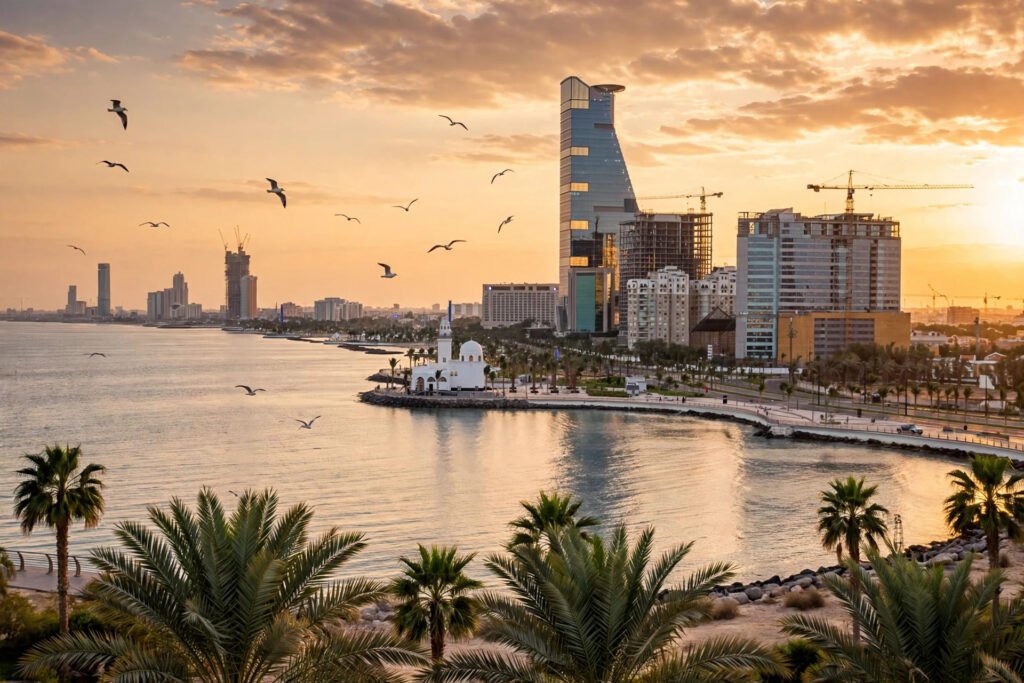
Jeddah has always been Saudi Arabia’s commercial heart, home to the busiest seaport on the Red Sea and a long-standing trading tradition. In 2026, the city is being reshaped by flagship developments — the Jeddah Central project, the Jeddah Economic City (including the planned Jeddah Tower, set to become the world’s tallest building), Red Sea tourism gateways, and major port expansions — all of which generate continuous hiring across construction, logistics, hospitality, and services.
What defines the 2026 Jeddah job market:
- Vision 2030 mega-projects: Construction, engineering, and project management roles remain in strong demand as Jeddah Central and waterfront developments move forward.
- Logistics and trade hub: Jeddah Islamic Port is one of the largest ports in the Middle East, supporting a huge ecosystem of freight, warehousing, customs brokerage, and supply chain jobs.
- Tourism and hospitality boom: Red Sea tourism initiatives have turned Jeddah into a gateway for visitors, driving demand for hotel staff, restaurant workers, tour operators, and event management professionals.
- Healthcare and education growth: New hospitals and private schools serving a growing population keep recruiting doctors, nurses, teachers, and administrators.
- Saudization (Nitaqat): Some roles are reserved for Saudi nationals, but expatriates remain heavily hired in construction, healthcare, hospitality, domestic services, IT, and specialized engineering.
English is widely used in multinational companies, large Saudi conglomerates, hotels, and hospitals. Arabic is a genuine advantage — especially in customer-facing and government-adjacent roles — but it is not a dealbreaker for most expatriate hires in Jeddah.
In-Demand Jobs in Jeddah 2026 with Salaries
The salary ranges below are realistic monthly figures in Saudi Riyals (SAR) for 2026, based on current market conditions. Actual offers vary with experience, employer size, and negotiation. Remember: Saudi Arabia charges no personal income tax, so these are effectively take-home figures.
Logistics, Ports & Warehousing
- Warehouse associate / picker: SAR 2,500–4,000
- Forklift operator: SAR 3,500–5,500
- Customs clearance / brokerage officer: SAR 6,000–11,000
- Logistics coordinator: SAR 6,500–12,000
- Supply chain manager: SAR 15,000–28,000
Construction & Engineering
- Civil engineer: SAR 9,000–17,000
- Project manager (construction): SAR 18,000–32,000
- Site supervisor: SAR 6,000–11,000
- Electrician / HVAC technician: SAR 3,500–6,500
- Construction worker / mason: SAR 2,000–3,500
Hospitality & Tourism
- Hotel receptionist: SAR 3,500–6,500
- Waiter / restaurant staff: SAR 2,800–5,000 (plus tips and service charges)
- Chef (commis to sous chef): SAR 4,500–12,000
- Tour guide / guest relations: SAR 4,000–8,000
- Hotel general manager (mid-size property): SAR 18,000–35,000
Healthcare
- Registered nurse: SAR 5,000–10,000
- General practitioner: SAR 16,000–28,000
- Pharmacist: SAR 8,000–14,000
- Dental assistant: SAR 4,500–8,000
- Physiotherapist: SAR 7,000–13,000
IT & Digital
- Software developer: SAR 11,000–24,000
- Data analyst: SAR 10,000–20,000
- IT support / helpdesk: SAR 5,500–11,000
- Digital marketing specialist: SAR 7,000–14,000
Retail, Sales & Customer Service
- Sales executive (B2B): SAR 5,000–10,000 (plus commission)
- Retail sales associate: SAR 3,000–5,500
- Customer service representative: SAR 4,000–7,500
- Accountant: SAR 6,000–13,000
- Administrative assistant: SAR 4,500–9,000
Requirements for Jobs in Jeddah 2026
Before you start applying, make sure you meet the standard requirements that Jeddah employers and Saudi visa authorities expect:
- Valid passport with at least six months of remaining validity.
- Work visa sponsorship: Almost all expatriate roles require the employer to sponsor your work visa and iqama (residency permit). Tourist or visit visas do not authorize employment.
- Educational credentials: Professional roles typically require a bachelor’s degree or higher; many employers ask for degree attestation from your home country’s authorities and the Saudi embassy.
- Relevant experience: Most mid-level roles ask for 2–5 years of experience; skilled trades need documented work history and, in some cases, trade certificates.
- Medical fitness: A medical examination is mandatory for the iqama — this includes tests for communicable diseases.
- Professional licences: Healthcare workers need Saudi Commission for Health Specialties (SCFHS) classification; teachers need Ministry of Education recognition; engineers benefit from Saudi Council of Engineers membership.
- Clean record: A police clearance certificate is often required for visa processing.
For Saudis and current iqama holders already in Jeddah, the process is simpler: a job offer letter and transfer of sponsorship (for expatriates) or standard employment contract is usually enough.
How to Apply for Jobs in Jeddah 2026
Finding work in Jeddah is straightforward if you use the right channels. Follow this practical process:
- Prepare a Gulf-style CV: Keep it to two pages, include a professional photo, list your iqama status and transferability clearly at the top, and add references. Recruiters in Saudi Arabia expect this format.
- Use the major job portals: Create profiles on Bayt, GulfTalent, LinkedIn, and Akhtaboot, and filter by Jeddah. Set up job alerts for your target roles so new postings reach you first.
- Apply directly on company websites: Large employers in Jeddah — hospitals, hotel chains, logistics companies, and construction firms — post openings on their own careers pages before anywhere else.
- Work with recruitment agencies: Licensed agencies in Jeddah place candidates in healthcare, engineering, hospitality, and oil-and-gas-adjacent roles. Never pay a fee for a job offer — legitimate agencies are paid by employers.
- Network locally: Attend industry events, join Jeddah expatriate and professional groups on social media, and let contacts know you are looking. A large share of hiring in the kingdom happens through referrals.
- Tailor every application: Match your CV keywords to the job description, and write a short cover note explaining your availability, visa status, and notice period. This dramatically improves response rates.
- Prepare for interviews: Expect one or two rounds, often over video call for candidates outside the kingdom. Be ready to discuss salary expectations in SAR and your joining timeline.
- Verify the offer: Before signing, confirm the employer will provide work visa sponsorship, medical insurance, and housing or a housing allowance — these are standard for expatriate contracts in Jeddah.
A word of caution: job scams are common. Never pay anyone for a visa, a job offer, or “processing fees,” and verify unfamiliar companies through the Saudi Ministry of Commerce business registry before sharing documents.
Salary & Benefits in Jeddah 2026
Beyond the base salary, expatriate employment packages in Jeddah typically include benefits that make a real difference to your total compensation:
- Tax-free income: No personal income tax — your SAR salary is your take-home pay.
- Housing: Many employers provide company accommodation or a housing allowance (commonly 25% of basic salary, paid annually).
- Medical insurance: Mandatory employer-provided health insurance for you, and often for your family.
- Annual flights: A yearly return ticket to your home country is standard in most expatriate contracts.
- End-of-service award: Saudi labour law guarantees an end-of-service benefit — roughly half a month’s salary per year for the first five years, then a full month per year after that.
- Annual leave: Minimum 21 days of paid leave per year, rising to 30 days after five years with the same employer.
- Transportation: Some roles include a company car or transport allowance, particularly in logistics and sales.
Cost of living note: Jeddah is noticeably cheaper than Dubai or Riyadh for housing and daily expenses, so a mid-range SAR salary stretches further here. A single professional can live comfortably on SAR 6,000–9,000 per month including rent in a decent neighbourhood, while families typically need SAR 12,000+.
Frequently Asked Questions About Jobs in Jeddah 2026
What are the highest-paying jobs in Jeddah in 2026?
Senior construction project managers (SAR 18,000–32,000), supply chain managers (SAR 15,000–28,000), doctors (SAR 16,000–28,000), and experienced software developers (SAR 11,000–24,000) are among the top earners. Specialized engineers and hotel general managers also command premium salaries.
Do I need to speak Arabic to work in Jeddah?
Not for most expatriate roles. Multinational companies, hotels, hospitals, and large contractors operate in English. That said, basic Arabic significantly improves your chances in sales, customer service, and any role dealing with government offices.
Can I work in Jeddah on a visit visa?
No. Employment on a visit or tourist visa is illegal in Saudi Arabia and carries heavy penalties for both worker and employer. You need a proper work visa sponsored by your employer, which converts to an iqama (residency permit) after arrival.
How long does the Jeddah work visa process take?
Typically 4–8 weeks from signed offer to visa issuance, depending on document attestation, medical tests, and embassy processing times. Having attested degrees and a clean medical report ready speeds things up considerably.
Is Jeddah cheaper than Riyadh or Dubai?
Yes, in most respects. Rents, dining, and entertainment in Jeddah run lower than in Riyadh and far lower than in Dubai, while salaries for comparable roles are similar — which is why many expatriates find their savings rate higher in Jeddah.
Which industries are hiring most in Jeddah in 2026?
Logistics and port operations, construction tied to Vision 2030 projects, hospitality and tourism, healthcare, and retail lead hiring. IT and digital roles are growing steadily as Saudi companies accelerate their digital transformation.