
Jobs in Saudi Arabia 2026: Complete Guide to Finding Work, Salaries & Visa
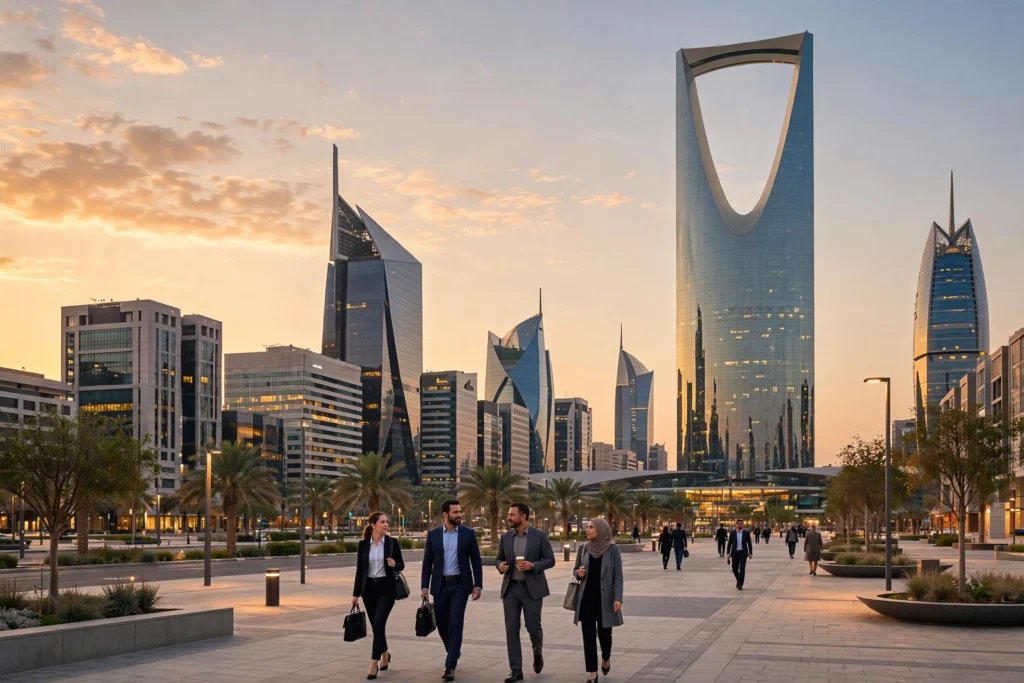
If you are looking for jobs in Saudi Arabia in 2026, you have picked one of the most rewarding job markets in the world. The Kingdom is in the middle of a massive transformation under Vision 2030, with over a trillion dollars being poured into mega-projects like NEOM, the Red Sea Project, and Qiddiya. That investment is creating thousands of new jobs every month — many of them filled by foreign professionals earning tax-free salaries in Saudi Riyal (SAR).
This guide covers everything you need to know: which industries are hiring, realistic salary ranges in SAR, the requirements for foreign workers, and a step-by-step plan to apply.
Job Market Overview in Saudi Arabia
Saudi Arabia’s economy is the largest in the Middle East, and 2026 marks a critical phase of Vision 2030. The government projects demand for millions of additional foreign workers over the coming years as construction, tourism, technology, and healthcare all expand at once.
Key facts about the Saudi job market in 2026:
- Economic driver: Vision 2030 diversification — oil still matters, but tourism, entertainment, tech, and renewable energy are growing fast.
- Top hiring cities: Riyadh (the capital and biggest job market), Jeddah, Dammam/Khobar in the Eastern Province, and the mega-project zones (NEOM, Red Sea, Qiddiya) which pay premium salaries to attract talent.
- Saudization: hiring policies reserve certain roles for Saudi nationals, but foreign professionals remain essential in engineering, healthcare, IT, construction, education, and hospitality.
- Hiring channels: Bayt, LinkedIn, Naukrigulf, company career pages, and licensed recruitment agencies are the main routes into the market.
In-Demand Jobs in Saudi Arabia 2026 (with Salary Ranges)
Salaries in Saudi Arabia are tax-free, and most professional packages include housing allowances (often 25–40% of base pay), annual return flights, health insurance, and an end-of-service gratuity. Figures below are realistic monthly ranges in Saudi Riyal (SAR).
Oil, Gas & Energy
The energy sector remains the highest-paying industry in the Kingdom.
- Petroleum Engineer: SAR 18,000–35,000
- Process Engineer: SAR 25,000–45,000
- Mechanical Engineer: SAR 20,000–38,000
- HSE Manager: SAR 28,000–50,000
- Renewable Energy Project Manager: SAR 30,000–55,000 (a fast-growing niche as green hydrogen projects expand)
Technology & IT
Digital transformation is creating intense demand for tech talent.
- Software Developer: SAR 10,000–22,000
- Full-Stack Developer: SAR 12,000–25,000
- Cybersecurity Specialist: SAR 20,000–38,000
- Data Engineer / Data Scientist: SAR 15,000–30,000
- DevOps Engineer: SAR 14,000–28,000
Healthcare
Hospitals in Riyadh, Jeddah, and Dammam are actively recruiting.
- Specialist Doctor: SAR 25,000–50,000
- Registered Nurse: SAR 6,500–12,000
- Pharmacist: SAR 8,000–14,000
- Medical Laboratory Technician: SAR 7,000–11,000
Construction & Mega-Projects
NEOM, Red Sea, and Qiddiya are hiring thousands of construction professionals.
- Project Manager: SAR 12,000–25,000
- Civil Engineer: SAR 8,000–18,000 (site roles up to SAR 25,000–30,000 on mega-projects)
- Site Engineer: SAR 12,000–25,000
- Welder: SAR 3,500–6,500
- Electrician: SAR 3,500–7,000
Finance & Accounting
- Accountant: SAR 6,000–12,000
- Financial Analyst: SAR 10,000–20,000
Hospitality & Education
- Hotel staff, chefs, restaurant supervisors: SAR 3,000–8,000 depending on role and star rating
- International school teachers: SAR 10,000–20,000, usually with housing and annual flights
General Benchmarks
- Entry-level professional roles: SAR 3,500–6,500
- Mid-level professionals: SAR 7,000–15,000
- Senior professionals: SAR 15,000–30,000
- Executive and specialist roles: SAR 30,000+
Requirements for Working in Saudi Arabia
Foreign workers need an employer-sponsored work visa. You cannot apply for a work visa on your own — the Saudi employer sponsors you.
Eligibility:
- A valid passport (6+ months validity)
- A genuine job offer from a Saudi employer
- Relevant education, qualifications, and experience
- Medical fitness (medical examination at an approved center)
- Police clearance certificate (where required)
- Profession-specific approvals for regulated roles (e.g., doctors, engineers, nurses)
Typical documents: passport and passport-size photographs, signed employment contract, educational and experience certificates (attested), medical examination report (GAMCA/Wafid-approved center), police clearance certificate, visa application forms.
How to Apply for Jobs in Saudi Arabia (Step-by-Step)
- Prepare Your CV and Certificates — Create a clean, two-page CV tailored to Saudi employers. Have your degrees and experience certificates attested in advance; attestation can take weeks, so start early.
- Apply Through Trusted Channels — Apply on Bayt, LinkedIn, Naukrigulf, and directly on company career pages. You can also use licensed recruitment agencies — always verify an agency is licensed, and never pay large placement fees for an unconfirmed offer.
- Pass Interviews — Many employers conduct video interviews first, then in-person rounds for senior roles. Research the employer and be ready to discuss why you want to work in Saudi Arabia.
- Sign the Job Offer and Contract — Your contract should state salary, housing and transport allowances, annual leave, flights, and end-of-service benefits. Read it carefully before signing and keep a copy of everything.
- Employer Starts Your Work Visa — Your employer obtains work-visa authorization and registers your contract on Qiwa, Saudi Arabia’s official labor platform.
- Complete Medical and Visa Stamping — Do your medical fitness test, then submit your visa application through the approved channel. From a confirmed job offer to arrival, the process commonly takes 4 to 10 weeks.
- Arrive and Get Your Iqama — After arrival, your employer processes your Iqama (residence permit) — your main legal ID in the Kingdom, needed for banking, healthcare, and daily life. The employer is legally required to keep it valid.
Salary & Benefits: What to Expect
- Tax-free salary: No income tax in Saudi Arabia — your gross pay is your net pay.
- Housing: Free or subsidized accommodation, or a housing allowance worth 25–40% of base salary.
- Transportation: Transport allowance or company transport, especially on project sites.
- Annual flights: Most contracts include a return ticket home each year.
- Health insurance: Mandatory employer-provided medical coverage.
- Paid leave: Minimum 21 days paid annual leave under Saudi labor law.
- End-of-service award: A gratuity paid when your employment ends, calculated on your salary and years of service.
- Overtime: Paid per labor law for eligible roles.
FAQs — Jobs in Saudi Arabia 2026
Q: Can foreigners get jobs in Saudi Arabia in 2026?
A: Yes. Despite Saudization, foreign professionals are actively hired in engineering, healthcare, IT, construction, education, and hospitality. You need a job offer first — the employer sponsors your work visa.
Q: What is the average salary in Saudi Arabia in 2026?
A: The average monthly salary for professionals is roughly SAR 10,000–16,000, tax-free. Highly skilled specialists earn SAR 25,000–45,000+ per month, while low-skilled roles start around SAR 1,500–2,500.
Q: Do I need a work permit before arriving in Saudi Arabia?
A: Yes. Non-GCC nationals need an employer-sponsored work visa obtained before travel. After arrival, your employer processes your Iqama (residence permit).
Q: Which cities in Saudi Arabia pay the highest salaries?
A: Riyadh offers the highest pay (about 10–15% above average). Jeddah is competitive with a lower cost of living. NEOM and Red Sea Project sites pay 20–30% premiums to attract talent to new developments.
Q: Is healthcare included in job contracts?
A: Yes. Employer-provided health insurance is mandatory in Saudi Arabia, and most professional packages also include annual return flights home and a housing allowance.
Q: How long does the Saudi work visa process take?
A: From a confirmed job offer to arrival, expect roughly 4 to 10 weeks depending on how quickly the medical exam, document attestation, and visa stamping are completed.